FARM PROCESS GUIDE

From clean straw
to a market-ready pack.

Our practical workflow for producing consistent oyster mushrooms and protecting freshness until they reach the buyer.

6Production stages
6Packaging checks
2–5°CTypical cold storage
Important: Exact temperature, humidity, spawn rate and crop timing vary by oyster species, strain, season and local conditions. Use your spawn supplier’s recommendations and maintain written batch records.

PART ONE

Production,
step by step.

Hygiene is not a separate step—it is the discipline connecting every stage.

01Day 0 · Raw material
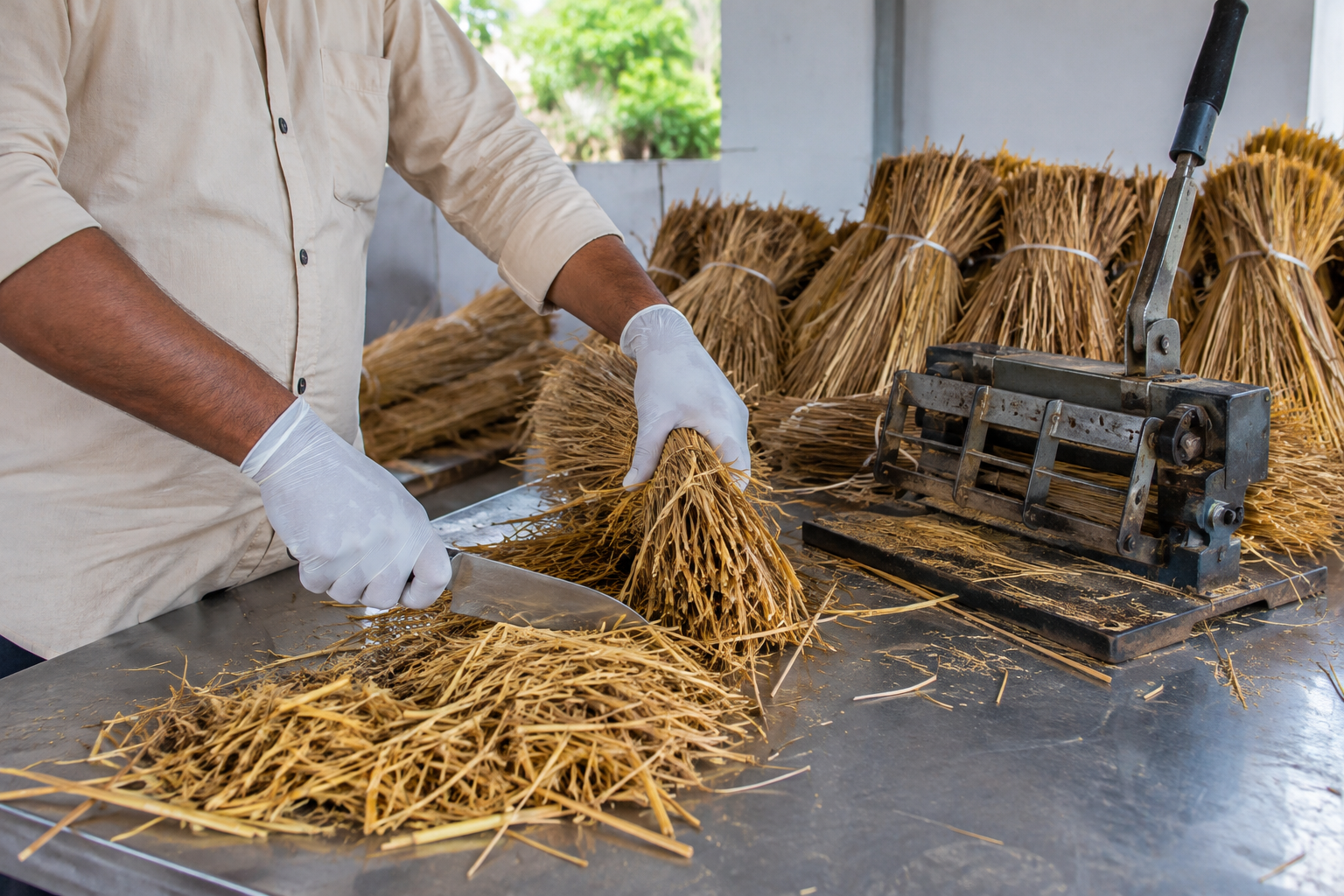
Gloved worker selecting and chopping clean golden straw for oyster mushroom substrate

Select and prepare the straw

Choose clean, dry wheat or paddy straw without mould or chemical contamination. Chop it into roughly 3–5 cm pieces so moisture and spawn distribute evenly. Remove dust, dark pieces and foreign material before soaking.

  • Clean, golden straw
  • No musty smell
  • Potable water
02Day 0 · Preparation
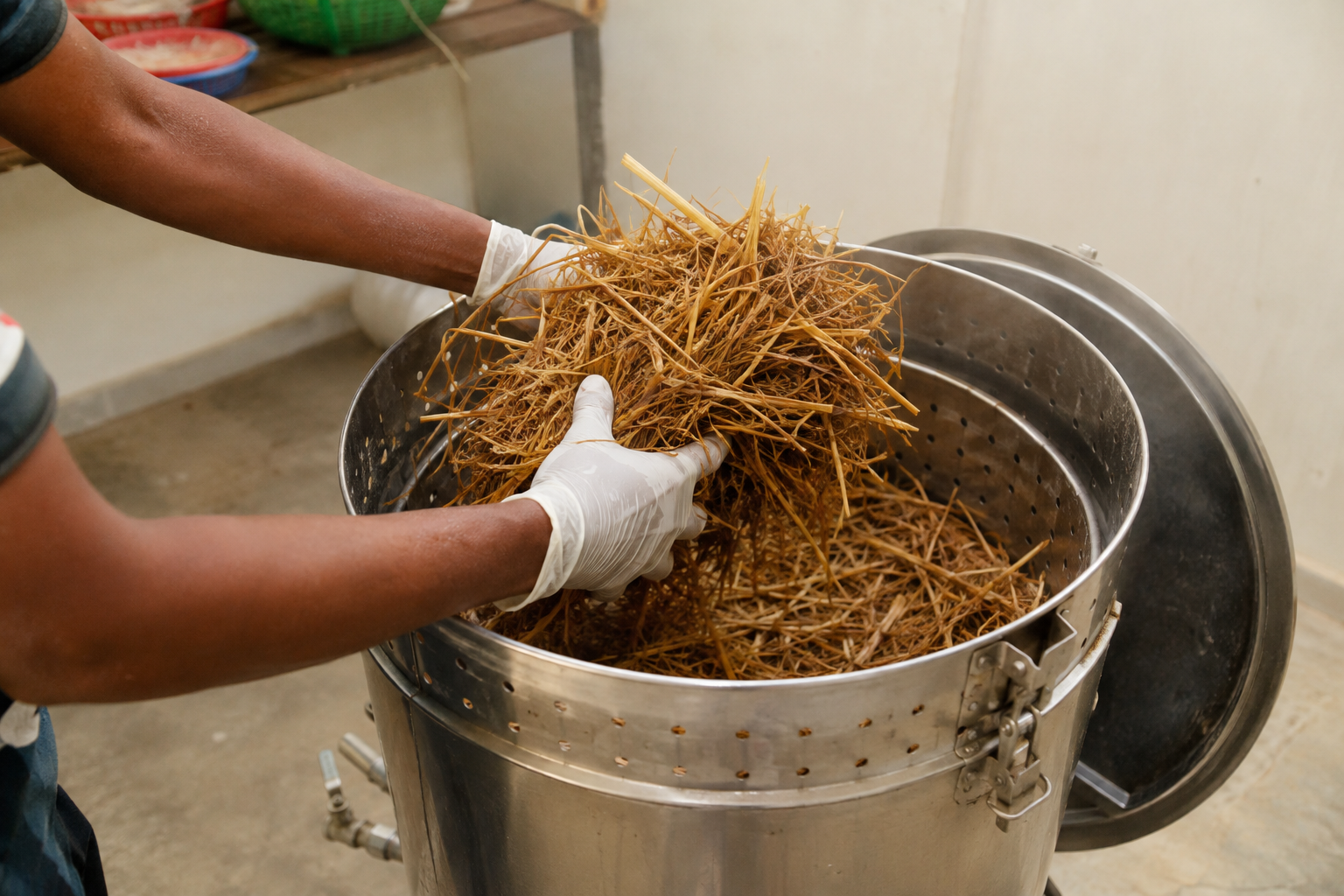
Gloved worker loading chopped straw into a stainless-steel pasteurisation basket

Hydrate and pasteurise

Soak the chopped straw, then pasteurise it using hot water or steam. A common small-farm method holds the wet straw near 65–70°C for about 60–90 minutes. Drain on a sanitised surface until it is moist but no water runs when firmly squeezed.

  • Even heat exposure
  • Approx. 65–70% moisture
  • Cool before spawning
03Day 0–1 · Inoculation
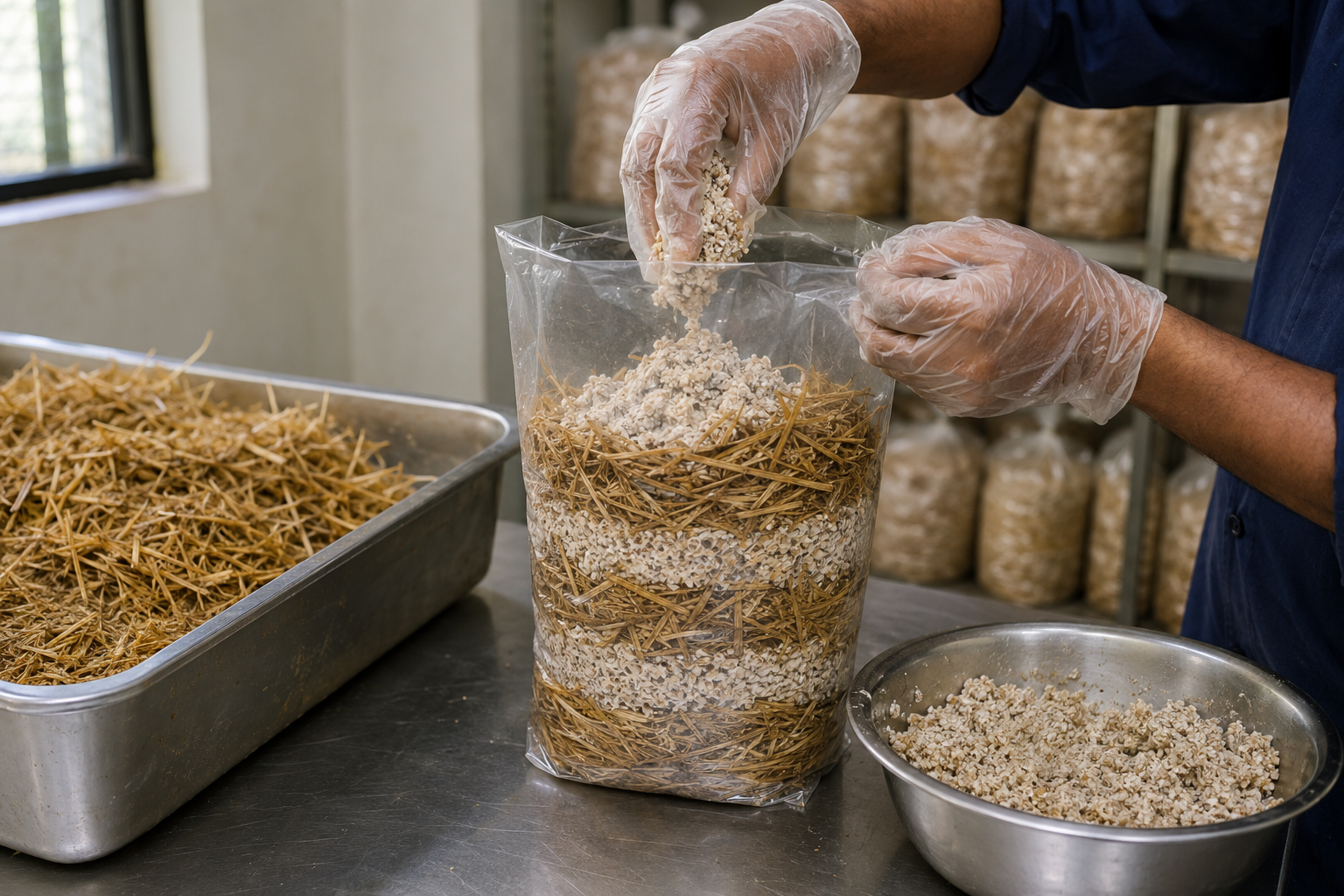
Gloved worker layering straw and mushroom spawn in a transparent grow bag

Fill bags and add spawn

In a clean room, layer cooled straw and good-quality oyster mushroom grain spawn inside food-safe polypropylene bags. Distribute spawn evenly, gently compress the bag, close it securely and add the required air holes or filter arrangement.

  • Clean hands and tools
  • Traceable spawn batch
  • Bag and date label
04Day 1–18 · Spawn run
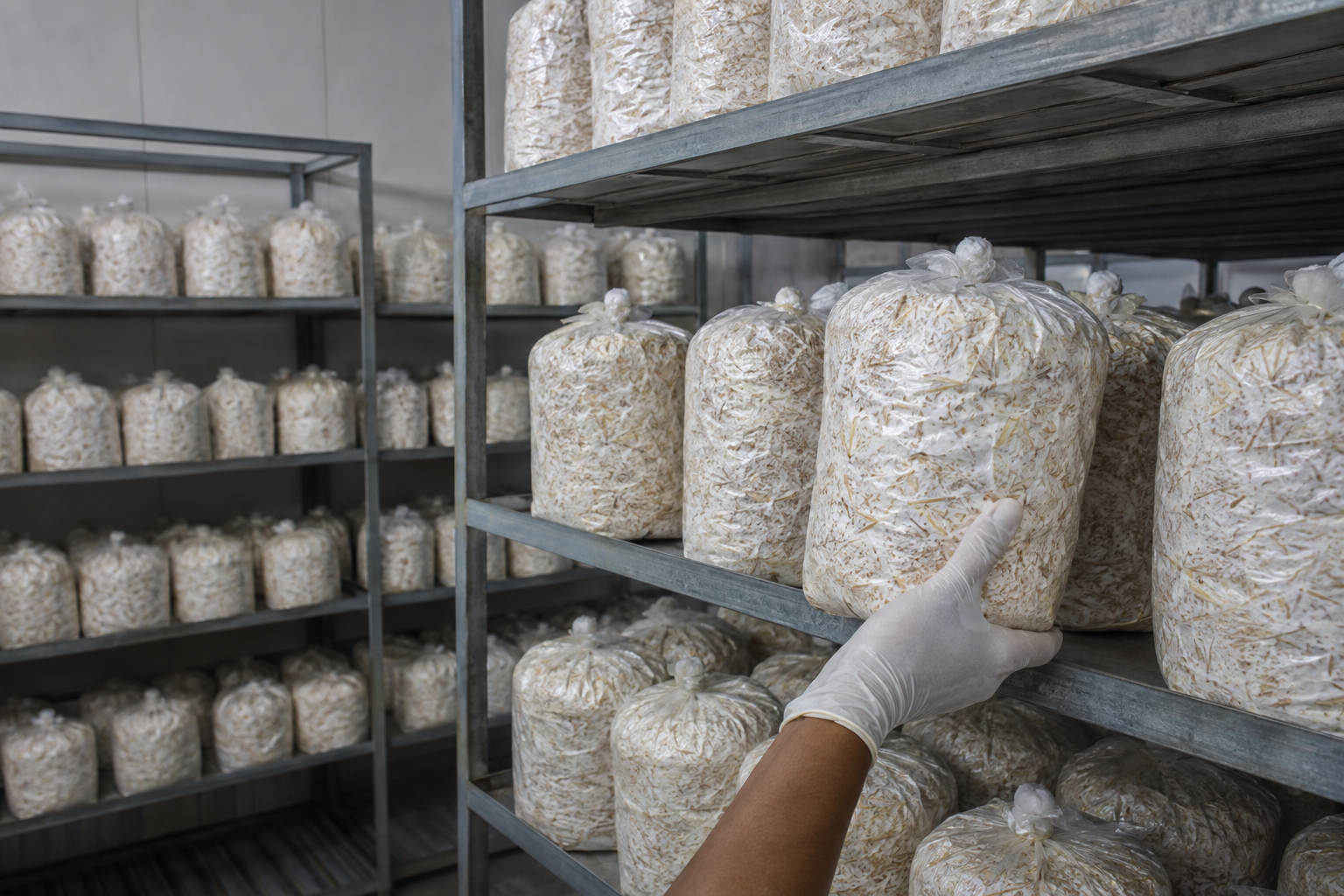
Fully colonised oyster mushroom substrate bags being inspected on incubation racks

Incubate until fully white

Keep bags on clean racks in a dark or low-light incubation area with suitable temperature for the chosen strain—commonly around 20–28°C. Avoid direct airflow and inspect daily. Healthy white mycelium should progressively colonise the straw.

  • No green or black mould
  • Stable room temperature
  • Remove suspect bags
05Around Day 15–25 · Fruiting
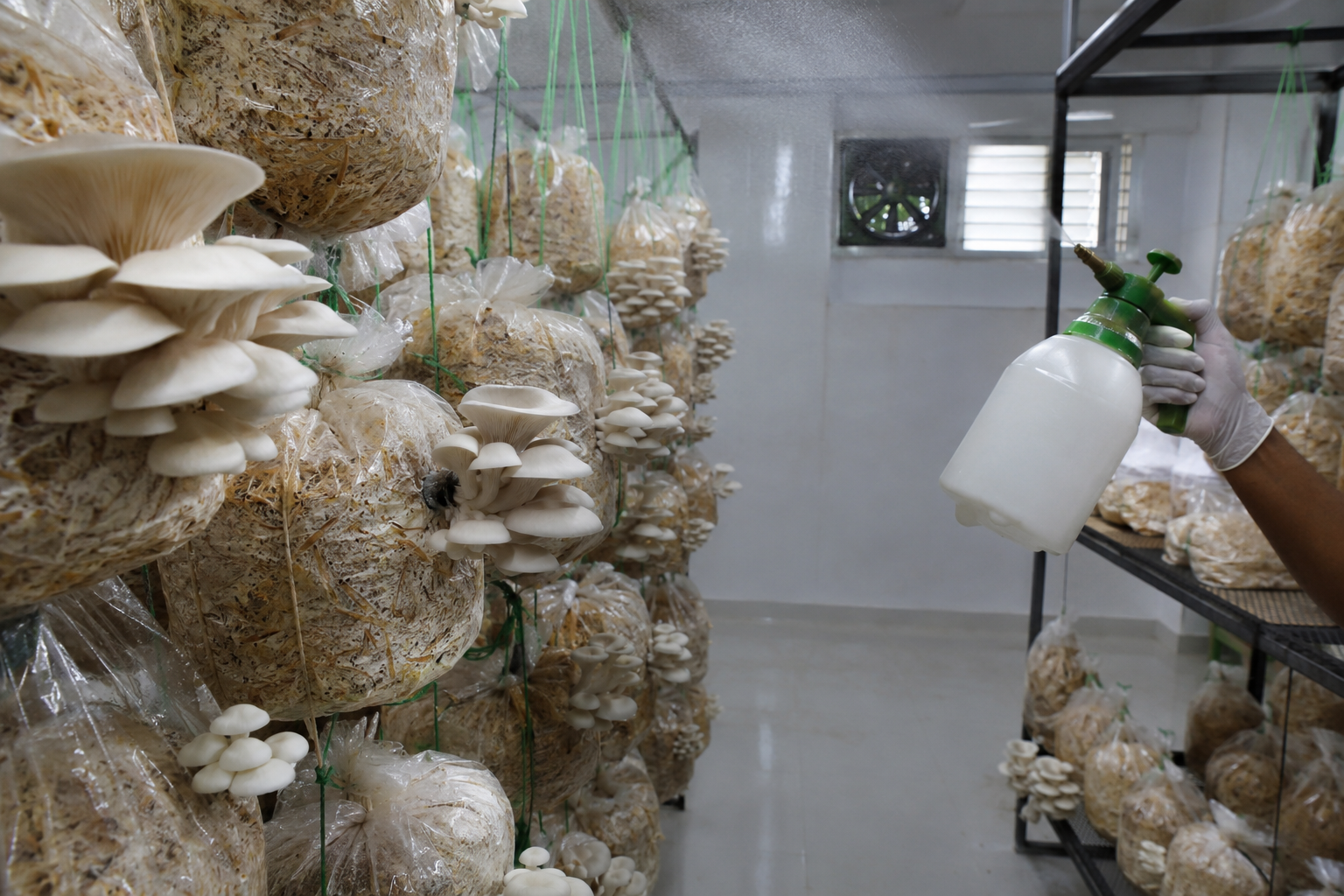
Oyster mushroom fruiting room with developing clusters, ventilation and controlled misting

Initiate fruiting

Move fully colonised bags to the fruiting room and make clean openings as required. Maintain high relative humidity, diffused light and continuous fresh-air exchange. Mist the room and surfaces—avoid soaking young clusters directly.

  • 85–95% RH typical
  • Fresh air exchange
  • No standing water
06Usually Day 20 onward · Harvest
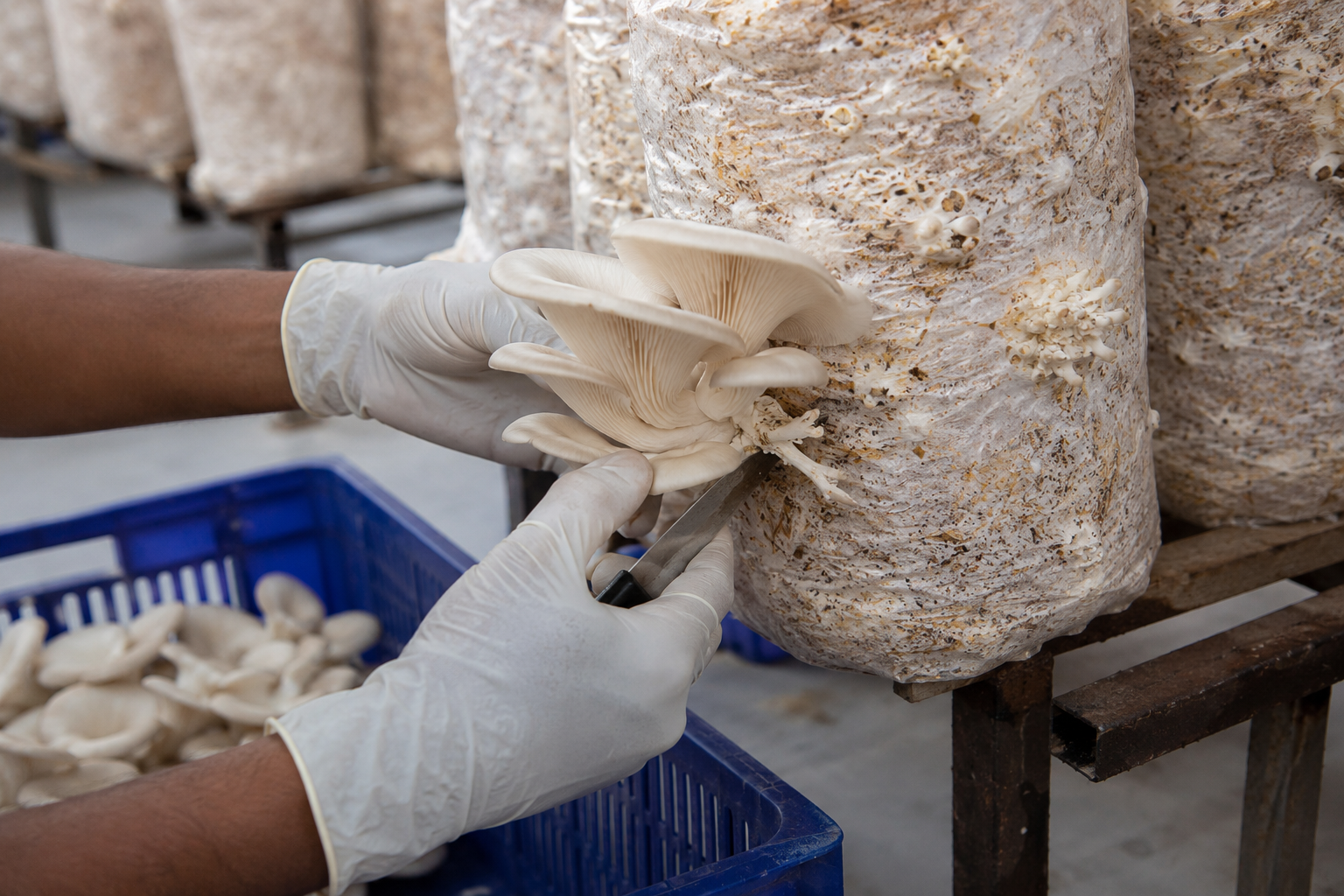
Gloved worker cutting a mature oyster mushroom cluster cleanly from a grow bag

Harvest at the right stage

Harvest a whole cluster when caps are well formed but edges remain slightly turned down. Twist gently or cut cleanly at the base. Handle mushrooms by the base to protect the delicate caps and gills.

  • Firm, fresh caps
  • Clean cut base
  • Harvest in cool hours

PART TWO

Pack freshness,
not just mushrooms.

Oyster mushrooms lose quality quickly if they are warm, wet or compressed. Fast, clean handling and a reliable cold chain protect both appearance and shelf life.

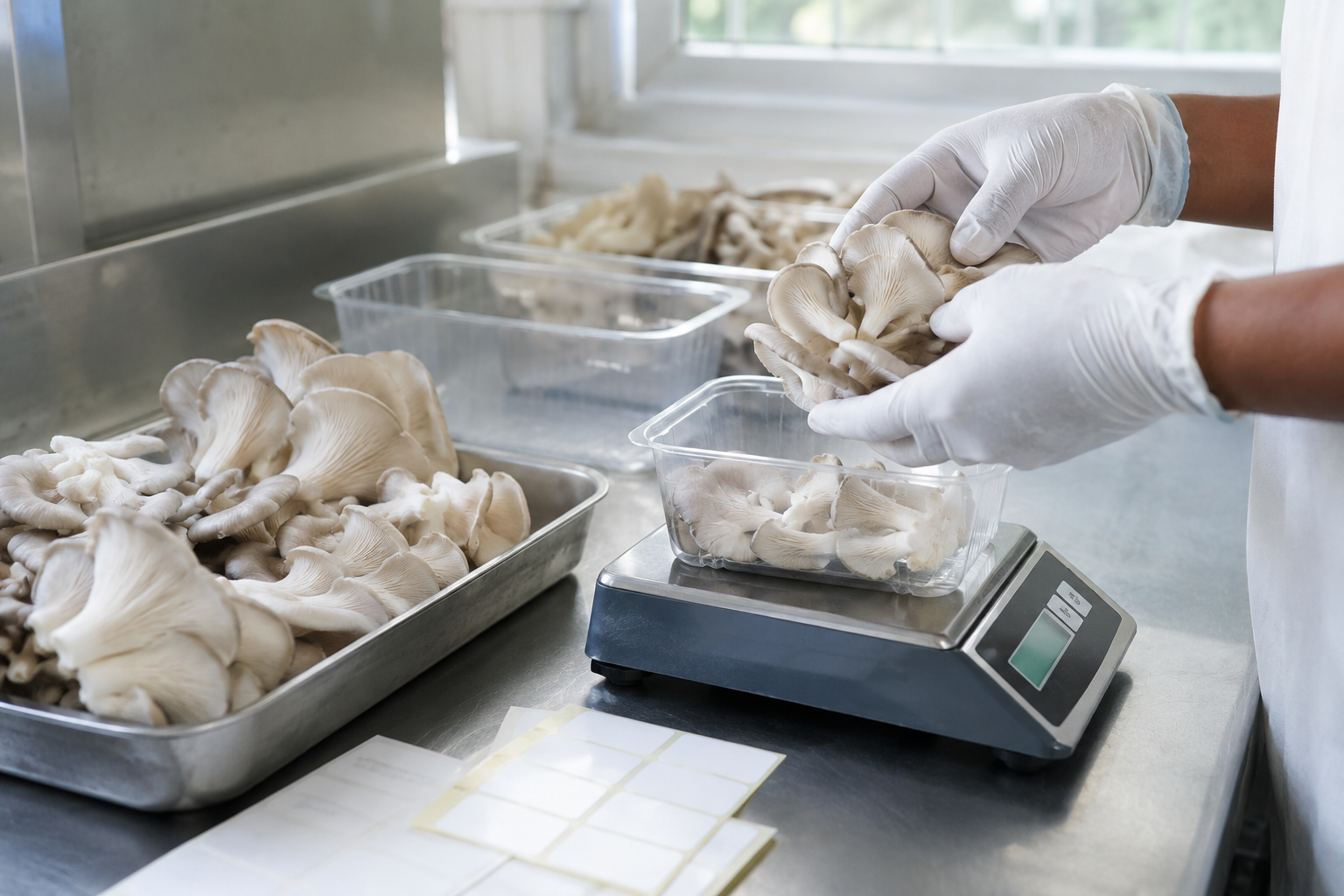
Gloved worker weighing fresh oyster mushrooms into a food-grade punnet
01

Trim & inspect

Remove the tough substrate base, loose straw and damaged mushrooms. Never wash before packing unless the sales format specifically requires it.

02

Grade

Separate by cap size, colour, firmness and cluster quality. Keep premium retail clusters apart from food-service or processing grade.

03

Weigh

Use a clean, calibrated scale. Common retail units are 150 g, 200 g, 250 g and 500 g; bulk food-service packs may be 1–2 kg.

04

Pack

Use clean, food-grade ventilated punnets, trays with breathable film, or perforated bags. Avoid crushing and leave space for air circulation.

05

Label

Show product name, net weight, packing date, batch number, storage instruction, farm/contact details and any legally required declarations.

06

Pre-cool & dispatch

Move packed mushrooms quickly into clean refrigeration, typically around 2–5°C. Maintain the cold chain and deliver as soon as practical.

PACK FORMATS

Right pack.
Right buyer.

BuyerFormatPriority
Retail / home150–500 g ventilated punnet or perforated bagPresentation + convenience
Restaurant1–2 kg food-grade bulk packFreshness + low handling
WholesaleVentilated master crate with protected inner packsCold-chain durability
Dried productMoisture-barrier heat-sealed pouchLow moisture + airtight seal
Rejectslimy, sour-smelling or visibly contaminated mushrooms
Recordbatch, harvest, pack quantity and buyer traceability
Rotatestock using first-in, first-out discipline

MUSHROOINDIA STANDARD

Clean production.
Careful packaging.

This workflow is the foundation for supplying dependable, farm-fresh oyster mushrooms to Agra’s homes and food businesses.

Return to home
WhatsApp